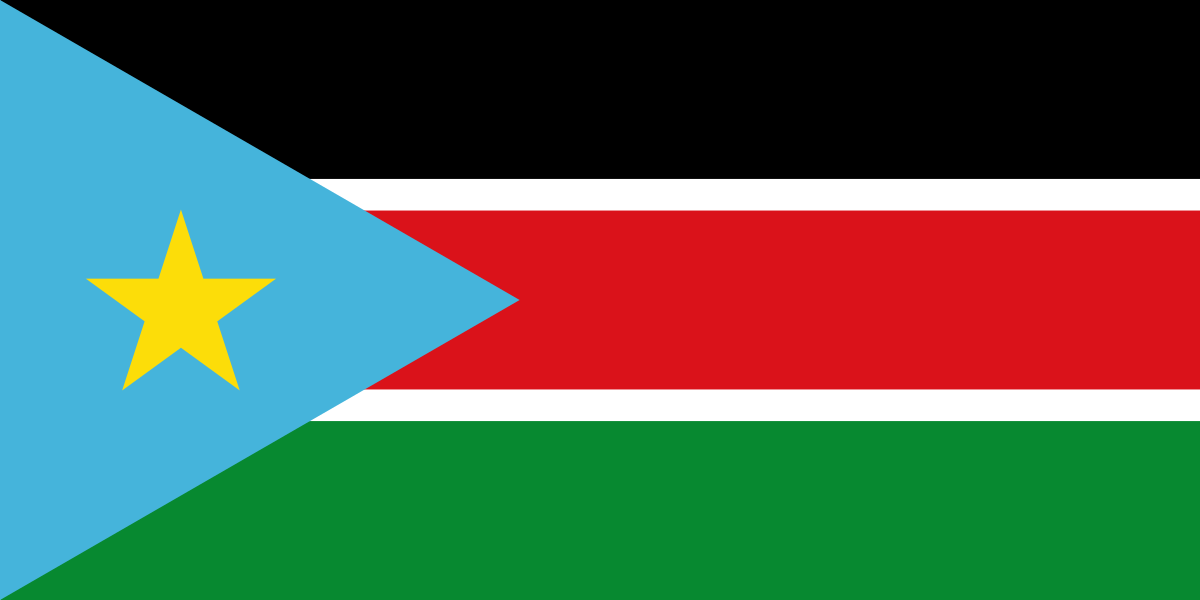
India recognised South Sudan at independence in July 2011 and has since built a relationship centred on three pillars: ONGC Videsh's oil investments in South Sudan's Greater Nile Petroleum Operating Company (GNPOC) consortium, significant Indian peacekeeping contributions to UNMISS (UN Mission in South Sudan), and humanitarian assistance during one of the world's most severe ongoing humanitarian crises. Despite South Sudan's political instability and civil conflict (2013–18), India has maintained consistent engagement.
COOPERATION AREAS
Where India and South Sudan actually work together
4 active areas of cooperation, as of July 2026. Click any card for the full brief.
TRADE & INVESTMENT
By the numbers
Estimates for 2023, including ONGC Videsh equity oil lifted from South Sudan fields. Trade data is limited by South Sudan's weak trade statistics. Pharmaceutical and goods exports are significantly lower; oil accounts for most import value.
$150m
Total bilateral trade in goods
$80m
India exports to country
$70m
India imports from country
Trade trajectory · USD bn
$0.15bnin 2024 · click a bar to compare years
TOP TRADED ITEMS
AGREEMENTS & MILESTONES
The relationship since 2011, in 6 dates
CURRENT STATE
Where things stand, 2026
India's South Sudan engagement is defined by the three pillars of oil investment (ONGC Videsh), peacekeeping (UNMISS), and humanitarian cooperation. The relationship is substantive despite the country's fragility. The 2018 peace agreement has improved the security environment, enabling gradual recovery of oil production and some reconstruction activity. Continued political tensions and recurring violence remain risks to India's oil investments and peacekeepers.
SIGNALS TO WATCH
On track / positive momentum
In progress / worth watching
Stalled or facing headwinds
Not yet started / unclear
QUICK FACTS
CapitalJuba
Population11 million
RegionAfrica
Diplomatic tiesSince 2011
ON THIS PAGE
Spot something wrong?
Every page has a suggest-a-correction link. Send a note, ideally with a source.